
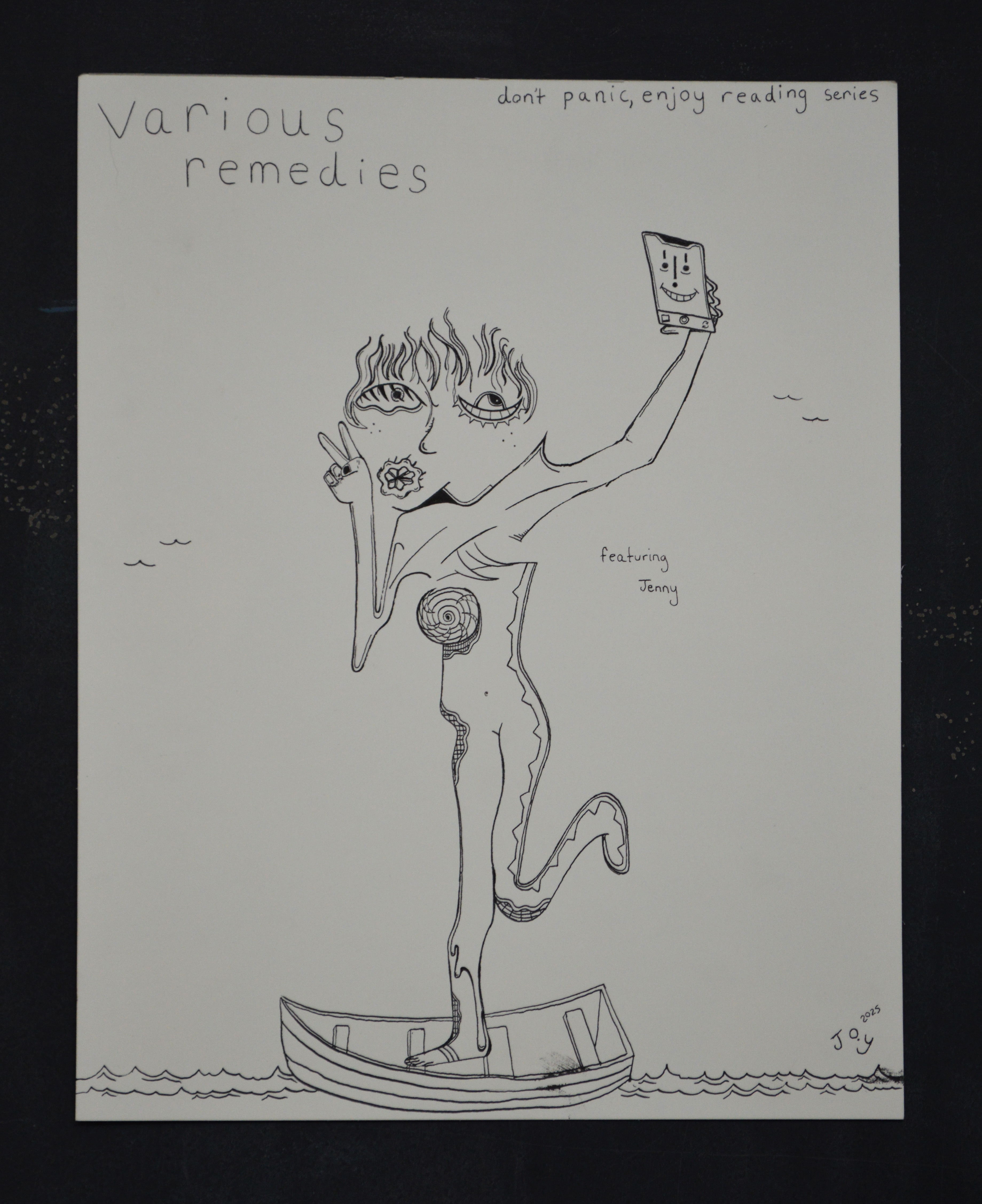
Jenny
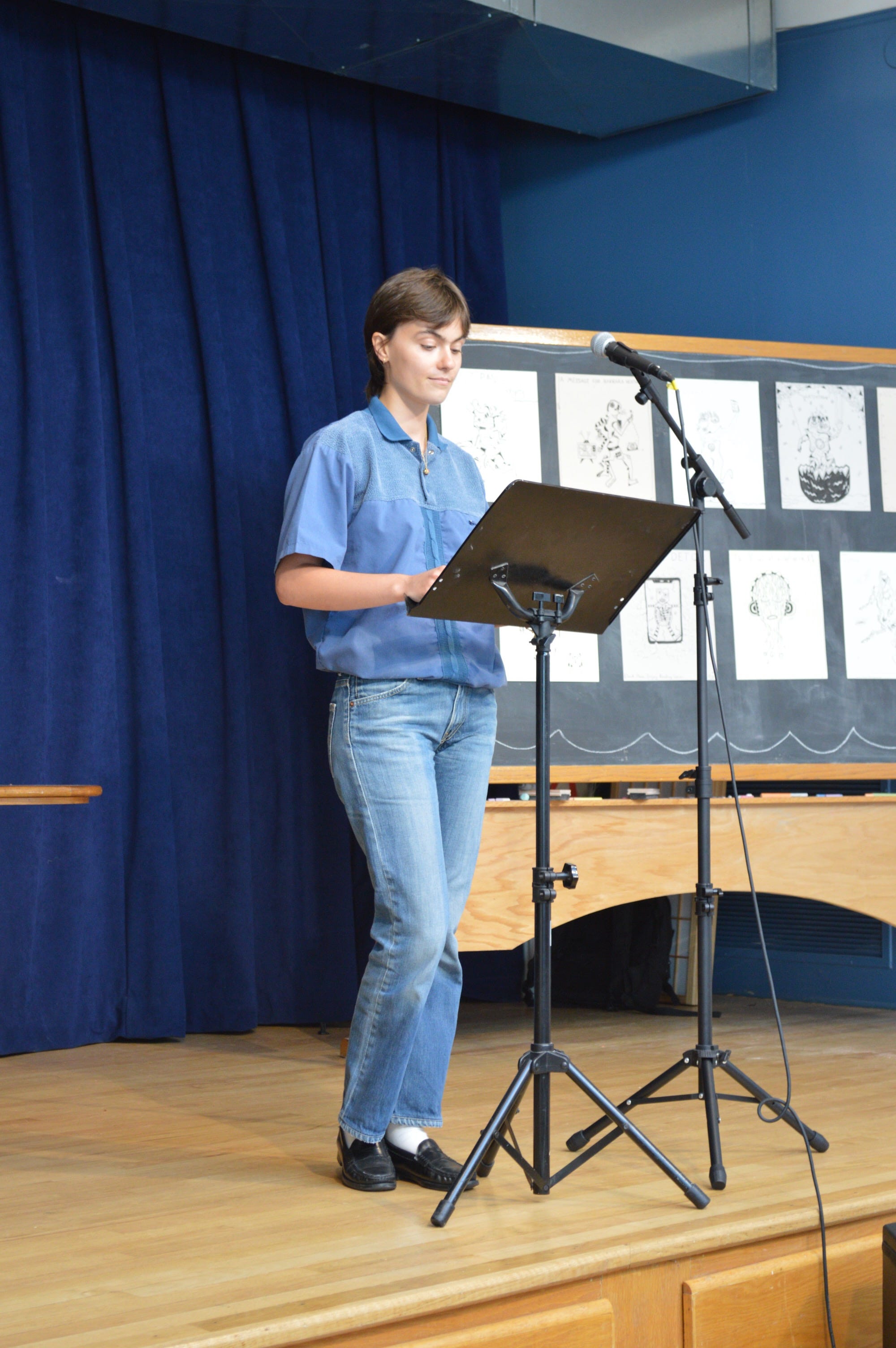
Gemmarosa Ryan read "Jenny" on Sunday, August 24th at the Rudolf Steiner Bookstore.


She’d been sent the outfit, so she wore it. Sent the blender, so she used it. She’d seen them both used by bodies in kitchens that resembled her own. Life was already marked by a pervasive precarity. She’d leave the speculation to her financial advisor and take easy bets when it came to her lifestyle. If the algorithm she’d spent hours perfecting didn’t recommend her well, it was her own fault. But she’d trained it well. That she knew.
Her bets paid off in the way she’d hoped. Admittedly, it was awkward at first, speaking on her lifestyle to no one in particular. But as her audience grew, she felt heartened in her choice of trajectory. She’d commodified herself, that she knew, but every successful person she sought to emulate did the same. To her, commodity was comfortable. They shared the root of the same Latin word, commodus: advantageous, convenient.
This route she’d chosen was certainly preferential to the alternative—slogging at some job she despised (though it would be hard to imagine a job she was actually qualified to work). In another life, this lack of purpose would have been rather evident, would have bothered her ceaselessly. She knew that, though she nursed the insecurity subconsciously. After all, she’d used her image to her advantage. She had a purpose, however trivial. As her following grew to the low triple digits, a modest 100k, she grew in conviction that her lifestyle was an exemplar above others, and she felt a certain responsibility to lead the way.
She couldn’t have anticipated the struggle of leadership when she began. The incapacity to turn off the public-facing façade, the compromises made to upkeep the assets to her image: her body, her home, her relationships (however transactional they had become in the process). The optimization never really ended, and she was rarely entitled to turn off.
This job (life) toed a fine line between consistent invasion and total ambivalence. She was unsure which one she detested more, though her actions suggested the latter. Each time her engagement plummeted, she’d panic. Everything around her turned red, a big crimson sale sign she’d have to place on all the things she’d been given (or purchased at a discount).
She’d call her boyfriend up and use him as a prop in some video that sold romance and stability. They’d go out and stage a date night and he’d record her sipping a skinny marg in a dress she’d been generously compensated to wear. Those videos always did well. When she’d read the comment section, she’d see the litany of parasocial avatars who wanted to manifest her reality into their own. Though those comments of affirmation were always punctuated by the occasional troll, throwing an all-too-personal low blow that made Jenny put down her phone (a rarity given she was the type to buy extra-fast Wi-Fi on a plane that cruised for only an hour).
There was a time, one she vaguely remembered, before her parents had let her have a phone of her own, where she could sit with herself for an hour. Age ten, spent alone in the backyard of her suburban enclave, waiting for dinner to get made. But she was so far removed from the rhythm of those days. The demands of her life were of constant engagement; every moment of free time could and should be occupied, milked for all the content it could provide.
At first, she’d enjoyed it, this feeling that her life could be her work, that the small quirks of a day could be important to others (and consequently herself). She’d been enthusiastic to set up the tripod and the ring light. She shot her videos in one take. But as her audience grew, new requirements arose. People began complaining of the repetitive nature of her everyday—they demanded she show them other things, new and exciting.
At first, she was excited to acquiesce, to plan out new routines and habits. To wear different things. To try out low-oil, low-carb recipes that appeared substantively different on camera but all tasted the same. Her persona felt more forced, and she needed to repeat the same actions several times for them to feel genuine enough to share. She felt of herself what one feels when they look at a word too long—skeptical of the simplicity.
Her resolution would be an acceleration through life, occupying herself with new brand deals, new videos, new all-inclusive retreats to various island locations. If she always had the next video planned, the growing angst and insecurity she nurtured could not find expression in her life, compromise the machinery of modernity, flatten the steady upward climb of her followers, her likes, her life.
Impatient for the attention of others, Jenny compromised the attention she could otherwise give to the world. Remaining occupied with the thing on the thing, the second layer of life, the digital blanket that encouraged one to escape all affect, she sputtered and ruttered like a breaking boat from one day to the next, not knowing what would happen if the engine gave out finally, leaving her alone in the middle of the open ocean.
Gemmarosa Ryan is an artist, writer, and filmmaker whose work is currently featured in Tidal Magazine and is forthcoming in the New York Times. She is currently in pre-production on her first narrative short “Various Remedies.” Her previous experimental shorts have been awarded in several independent film festivals including New York Shorts and Flickers Rhode Island International Film Festival.
 | A guest post by
|